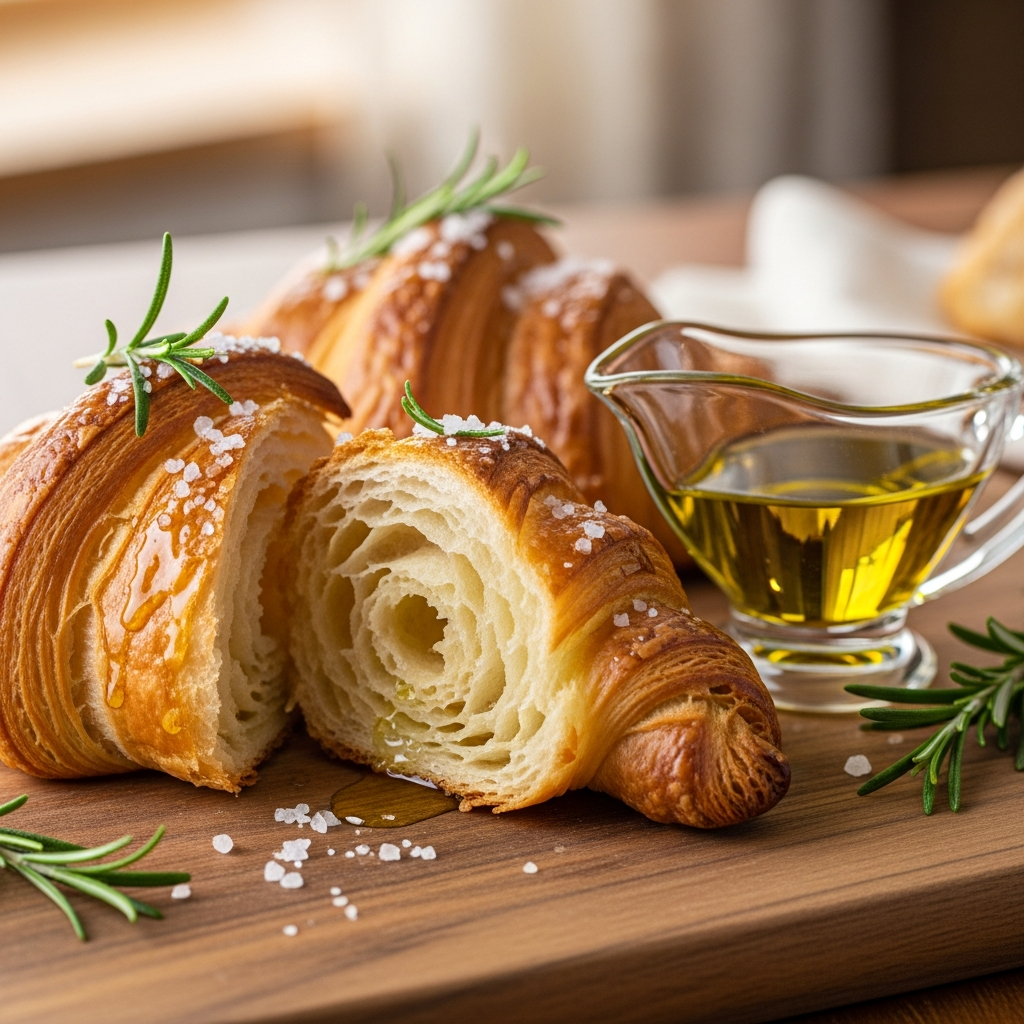
There’s something irresistibly comforting about a warm, flaky croissant straight from the oven-a timeless symbol of buttery perfection and Parisian charm. But what happens when you swap the traditional butter for rich, golden olive oil? Enter the olive oil croissant: a savory twist on a classic treat that marries mediterranean allure with French finesse. This delightful reinvention not only offers a lighter, heart-healthier choice but also introduces subtle fruity and peppery notes that elevate every bite. Join us as we explore how olive oil croissants are redefining indulgence, blending tradition with innovation in the most delicious way.
The Art of Infusing Olive Oil into Flaky Croissant Dough
Olive oil croissants redefine classic French pastry by intertwining the rich, fruity essence of high-quality olive oil with layers of tender, flaky dough. This savory twist creates a unique, aromatic experience, elevating your homemade croissants beyond the traditional butter-based versions. Originating from a love for Mediterranean flavors and artisanal baking, these croissants showcase how olive oil can lend subtle warmth and a delicate, crisp finish that makes every bite irresistible.
Prep and Cook Time
- Prep Time: 30 minutes (plus 12-16 hours of chilling and resting)
- Cook Time: 15-20 minutes
- Total Time: Approximately 13-16 hours (including resting)
Yield
- 12 flaky olive oil croissants
Difficulty Level
- Medium – requires patience and some skill with laminated dough
Ingredients
- 4 cups all-purpose flour, sifted
- 1/4 cup granulated sugar
- 2 tsp fine sea salt
- 2 tsp active dry yeast
- 1 1/4 cups whole milk, warmed (about 100°F / 38°C)
- 3/4 cup extra virgin olive oil (mild, fruity variety)
- 1 large egg, for egg wash
- optional: flaky sea salt for sprinkling
Instructions
- Activate the yeast: In a small bowl, dissolve 2 tsp active dry yeast with 1/4 cup warm milk and a pinch of sugar. Let sit for 5-10 minutes until foamy.
- Mix dry ingredients: In a large mixing bowl, combine 4 cups sifted flour, 1/4 cup sugar, and 2 tsp sea salt. Stir to blend evenly.
- Incorporate liquids: Make a well in the flour mixture and add the activated yeast, remaining 1 cup warm milk, and 3/4 cup extra virgin olive oil. Stir with a wooden spoon or dough hook attachment until a soft, slightly sticky dough forms.
- Knead and rest: Knead the dough on a lightly floured surface for about 8 minutes until smooth and elastic. Shape into a ball and cover with plastic wrap or a damp cloth. Refrigerate for 12-16 hours to relax the gluten and develop flavor.
- Lamination prep: After chilling, roll the dough into a 12″x18″ rectangle on a lightly floured surface. Brush a thin layer of olive oil over the dough’s surface to intensify the infusion. Fold the dough into thirds like a letter.
- Folding technique: repeat the rolling and folding process two more times, chilling the dough 30 minutes between folds. This builds the delicate layers essential for flakiness.
- Shape the croissants: Roll the dough out into a large rectangle (~1/4 inch thick).Cut into 12 triangles. Starting from the wide base, gently stretch each triangle and roll tightly towards the tip, ensuring a snug roll to trap the layers.
- Proof: place the shaped croissants on parchment-lined baking sheets.Cover with a clean, lightly oiled towel and let rise at room temperature for 1.5 to 2 hours until puffy and nearly doubled.
- Egg wash and bake: Preheat your oven to 375°F (190°C). Whisk one egg with a splash of water. Brush croissants gently with the egg wash for a glossy finish. Optionally, sprinkle with flaky sea salt to amplify the olive oil’s savoriness.
- Bake until golden: Bake for 15-20 minutes, rotating the trays halfway, until croissants are deep golden, crisp on the outside, and aromatic.
- Cool and savor: Let cool on wire racks for at least 15 minutes. Serve warm for the best melt-in-your-mouth texture combined with that signature fruity olive oil aroma.
Balancing Flavors: A Guide to Selecting the Perfect Olive Oil
Choosing the right olive oil is critical to the success of your croissants. Opt for a fresh, mild extra virgin olive oil with balanced fruity and peppery notes. Avoid harsh, bitter varieties that can overpower the delicate dough. Brands from Italy’s Liguria or Spain’s Andalusia regions offer excellent profiles to complement baked goods. For a vibrant aroma, refrigerate your oil before use-this slightly solidifies fatty acids, making it easier to integrate evenly into the dough without greasiness.
Creative Fillings and Pairings to Elevate Your Olive Oil Croissants
Transform your olive oil croissants into memorable savory treats by incorporating inspired fillings and pairings:
- Herbed ricotta and lemon zest: Blend ricotta with finely chopped rosemary, thyme, and a hint of lemon zest.Spread inside croissant dough before rolling for a fresh,creamy surprise.
- Roasted vegetables: Caramelized onions, roasted bell peppers, and sautéed mushrooms add umami depth.
- cheese varieties: Crumbled feta or shredded aged Manchego pairs beautifully with the olive oil’s green notes.
- Simple honey drizzle and sea salt: Post-bake, a light brush of wildflower honey and a pinch of flaky sea salt offer an enticing sweet-savory interplay.
- Rustic accompaniments: Serve alongside rich tapenades, soft cheeses, or a vibrant tomato jam for a Mediterranean-inspired brunch.
Tips and Techniques for baking Golden Crispy Olive Oil Croissants
Mastering the perfect olive oil croissant hinges on patience and attention to detail:
- Temperature control: Keep dough and olive oil cool during resting and folding to prevent the oil from melting prematurely, which can flatten your layers.
- Even rolling: Roll dough gently but firmly to create uniform layers. irregular thickness reduces flakiness.
- Proof patiently: Allow croissants to rise until noticeably puffed-under-proofing leads to dense pastries.
- baking surface: Use a stone or heavy baking sheet preheated for even browning and crisping.
- Storage: Fresh croissants are best enjoyed within 24 hours. For next-day enjoyment, gently reheat at 300°F (150°C) for 5-7 minutes to restore crunch.
Pair this recipe with our Roasted Vegetable Tapenade for a stunning Mediterranean-inspired spread that complements the olive oil croissants perfectly.
| Nutritional Info | Per Croissant (Approx.) |
|---|---|
| Calories | 280 kcal |
| protein | 6 g |
| Carbohydrates | 30 g |
| Fat | 15 g |

For a deeper dive into the amazing health benefits of olive oil and how to use it in your cooking, visit Extra Virgin Olive Oil Council. Their expert insights help bakers and chefs appreciate this liquid gold in every dish.
Q&A
Q&A: Olive Oil Croissants – A Savory Twist on a classic Treat
Q1: What makes olive oil croissants diffrent from traditional butter croissants?
A1: Unlike the classic croissant, which relies on layers of butter for its flaky texture and rich flavor, olive oil croissants use olive oil as the primary fat. This swap creates a slightly less buttery but distinctly aromatic and heartier crumb. The olive oil adds a subtle fruitiness and a savory depth that elevates the pastry from sweet breakfast fare to a versatile, elegant treat.Q2: Can olive oil croissants be made as flaky and layered as those made with butter?
A2: Absolutely! While butter is prized for its ability to create ultra-flaky layers, high-quality olive oil-especially extra virgin-can be used carefully to achieve a tender, layered pastry. The technique differs slightly, often involving folding and resting dough at cooler temperatures to encourage lamination. The result is a croissant with a delicate, tender crumb and a lightly crisp exterior, with a wonderful olive oil aroma.
Q3: What are the flavor profiles of olive oil croissants?
A3: Olive oil croissants carry a warm, slightly fruity essence, balanced by a gentle savory undertone. They are less sweet than traditional croissants, making them an excellent base for both savory and sweet accompaniments. The olive oil imparts a richness that feels more Mediterranean, inviting creative pairings with herbs, cheeses, or vegetables.
Q4: What savory fillings or toppings pair well with olive oil croissants?
A4: The beauty of olive oil croissants is their adaptability. savory fillings such as sun-dried tomatoes, roasted red peppers, fresh basil, or creamy ricotta cheese complement the olive oil’s flavors wonderfully. Toppings like flaky sea salt, cracked black pepper, or a sprinkle of za’atar spice add dimension. Think of them as a tasty canvas for ingredients inspired by the Mediterranean kitchen.Q5: Are olive oil croissants healthier than traditional ones?
A5: Olive oil is often celebrated for its heart-healthy properties, including beneficial monounsaturated fats and antioxidants. While both croissant types are indulgent, olive oil croissants can be a slightly lighter alternative to butter-based versions. plus, they cater well to those seeking dairy-free or vegan-kind pastries when made with appropriate dough adaptations.
Q6: How can I store olive oil croissants to keep them fresh?
A6: To maintain their delicate texture and aroma, store olive oil croissants in an airtight container at room temperature for up to two days. If you want to enjoy them later, freeze them wrapped tightly in parchment paper and foil. reheat gently in a warm oven to revive their tender crumb and rich olive oil flavor.
Q7: can olive oil croissants be enjoyed for occasions other than breakfast?
A7: Definitely! their savory personality makes olive oil croissants a perfect choice for lunchboxes, snack time, or elegant brunch spreads. They pair well with vegetable-based spreads, fresh salads, or even as a base for a light sandwich. Their subtle richness makes them a delightful surprise that transcends the morning pastry stereotype.
Q8: Is it difficult to bake olive oil croissants at home?
A8: While baking croissants requires patience and precision, swapping butter for olive oil doesn’t make the process substantially harder-it just means adjusting the technique slightly. The key challenges lie in mastering dough lamination and temperature control. For adventurous bakers, making olive oil croissants at home is a rewarding way to experiment with flavor and texture in a familiar favorite.
Final Thoughts
Whether you’re a devoted traditionalist or an adventurous foodie, olive oil croissants offer a delightful bridge between classic French patisserie and Mediterranean flair. Their flaky, buttery layers enriched with the subtle fruitiness of olive oil create a savory twist that awakens the palate and invites endless culinary creativity. Next time you crave a pastry that’s both familiar and refreshingly different, let olive oil croissants transport you to a world where tradition meets innovation-one golden, fragrant bite at a time.